From talk to traction: What needs to change now?
As Victoria approaches another state election, property industry leaders gathered for the Melbourne Property Think Tank 2026 to examine what is needed to turn the state's strong fundamentals into investment, development and housing delivery.
In brief
Hosted by Colin Biggers & Paisley, this year's Property Think Tank discussion highlighted a central challenge for Victoria's property sector: demand, land and opportunity remain, but increasingly complex planning processes, constrained project feasibility and uncertain policy settings are making it difficult to translate that potential into completed projects.
The evening focused on four connected themes: planning and policy reform, development feasibility and construction costs, tax reform and capital allocation and the areas offering the strongest opportunities for future growth.
A market with strong foundations
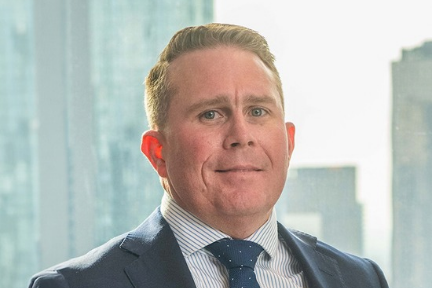
The keynote address was delivered by David Southwick MP, Deputy Leader of the Opposition and Shadow Minister for Planning, Housing and Building, Tourism and Major Events. David stated that Victoria continues to have the foundations required for growth, including land, population and industry capability, but needs greater confidence, certainty and competence to encourage investment and unlock development. He also emphasised the importance of government working with the private sector to deliver the housing and infrastructure needed to support future growth.
As David Southwick commented, "Real change has a plan. We have released ours and it is a plan to bring back confidence to Victoria."
Following the keynote, David joined a panel comprising Linda Allison, Chief Executive Officer of UDIA Victoria; Simon Aitken, Tax Services Partner at RSM; and Sam Tarascio, Managing Director of Salta Properties. Together, moderated by David Passarella, Partner in Colin Biggers & Paisley's Planning, Government, Infrastructure and Environment group, they explored the factors influencing investment confidence, project delivery and housing supply across Victoria.
Planning certainty is critical
A consistent theme throughout the discussion was the need for greater planning certainty, clearer approval pathways and more predictable decision-making timeframes. Planning certainty was repeatedly linked to investment confidence, housing delivery and the ability of projects to proceed.
From a developer's perspective, Sam Tarascio said certainty is critical because development is capital intensive and prolonged approval processes increase holding costs, weaken feasibility and discourage investment. He noted that unresolved requirements, missed approval timeframes and projects becoming caught in protracted approval processes make development more expensive and less attractive.
As Sam Tarascio explained, "Certainty is critical. If you've consulted and you've put clear rules in place and we as a developer can acquire sites knowing very clearly what we can do and how long it'll take, it'll make it much easier to proceed with projects."
The panel acknowledged that while recent planning initiatives have delivered some improvements, challenges remain around consultation, consistency and the ability to bring new housing supply to market efficiently. The discussion highlighted the importance of stable planning settings that support both established areas and Melbourne's growth corridors.
Feasibility under pressure
While planning approvals create opportunity, feasibility determines whether projects proceed. Rising construction costs, financing pressures, holding costs and regulatory changes have placed significant strain on project economics, with panellists noting that many approved projects remain unable to proceed under current market conditions despite strong underlying demand.
The discussion highlighted the need for policy development to better account for development economics and market realities. While planning reform remains important, panellists agreed that broader feasibility challenges continue to impact housing delivery and investment decisions.
"There needs to be a roadmap for tax reform and need to acknowledge that the feasibility issues are just incredibly constrained." said Linda Allison in relation to the housing statement.
Despite the challenges, Linda emphasised that Victoria's strong population growth, liveability, workforce and land availability continue to provide a compelling foundation for future growth if confidence can be restored.
Tax settings influence investment decisions
Tax reform emerged as one of the most significant topics of the evening, with discussion focusing on the impact of state and federal taxation settings on investment behaviour, capital allocation and housing delivery. Panellists discussed how taxes, charges and broader policy settings influence project viability and investment decisions across the property sector.
Simon Aitken outlined the cumulative impact of multiple taxes affecting property investment and development, and recent Federal tax changes to negative gearing and capital gains tax, noting that taxation remains a significant consideration for investors and developers when assessing opportunities.
Simon Aitken observed, "Anytime you impose a tax, it's a handbrake on investment. Anytime you reduce tax, it reduces development costs."
The panel explored opportunities to improve Victoria's competitiveness and attract investment back into the market, while recognising the importance of balancing policy objectives with the need to support development feasibility and housing supply.
Where are the opportunities?
Despite the challenges discussed throughout the evening, the panel identified several areas of opportunity.
Land lease communities, build-to-rent, growth corridor development and existing assets trading below replacement value were highlighted as areas that could attract future investment. Panellists agreed that Victoria's population growth, available land and long-term fundamentals continue to position the state favourably compared with other states.
The discussion also reinforced that housing affordability is influenced not only by purchase price, but by confidence in the long-term value and stability of housing investment. A strong rental market, housing diversity and greater certainty for investors and developers were all identified as important components of future growth.
Turning strong fundamentals into delivery
The Melbourne Property Think Tank reinforced that planning certainty, project feasibility and investment confidence are not separate challenges. Together, they determine whether Victoria can attract capital, deliver housing, support employment and translate its underlying strengths into long-term economic growth.
The path from talk to traction will require:
• clearer and more reliable planning pathways;
• policy settings that recognise development economics;
• more competitive and predictable taxation arrangements;
• stronger coordination between government, councils and industry; and
• infrastructure and land release that support housing delivery at scale.
Victoria has the population growth, land, workforce and industry capability to create significant opportunities across residential, commercial, industrial, logistics and digital infrastructure markets. The challenge now is creating the certainty and feasibility required to convert those opportunities into delivered projects.
For further discussion on the issues explored and their implications for Victoria's property sector, please contact Colin Biggers & Paisley's Property & Development team. Our specialists can provide strategic guidance on navigating the evolving legal, planning and commercial landscape shaping property investment and development.