Brisbane Property Think Tank 2026: Productivity, performance and the path forward
Queensland’s property sector is experiencing strong growth, fuelled by population increases, infrastructure investment and housing demand. At this year’s Brisbane Property Think Tank, industry leaders explored the key challenges and opportunities shaping the market, and how collaboration can help unlock future housing supply.
In brief
Hosted by Colin Biggers & Paisley, the Brisbane Property Think Tank 2026 discussion focused on Productivity, Performance and the Path Forward, examining the planning, infrastructure, financing and workforce challenges influencing development across Queensland.
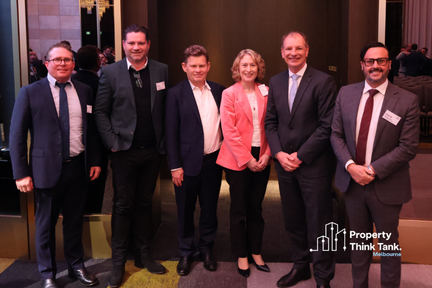
Moderated by Stephen Webb, Partner in Colin Biggers & Paisley’s Property & Development team, the panel featured Julian Simmonds, Chief Executive Officer of Economic Development Queensland (EDQ), Kirsty Chessher-Brown, Chief Executive Officer of UDIA Queensland, Murray Bell, Managing Director of Murray Bell Planning and Todd Pepper, Founder and Executive Director of Alceon Queensland. Together, they explored what is helping and what is hindering, the delivery of housing and development across the state.
Productivity: Improving delivery and reducing delays
Productivity was a key focus of the discussion, with panellists examining the factors affecting the speed at which developments move from approval to completion.
Speaking about EDQ’s approach, Julian Simmonds commented, publicly reported performance targets had sharpened the organisation’s focus on delivery and accountability while also noting that, "We don’t want to have a regulator mindset. We want to have a partner mindset.” He emphasised the importance of government working alongside industry to understand commercial realities and support practical outcomes.
A recurring theme throughout the discussion was the impact of delays at the end of the development process, particularly around plan sealing, utility approvals and service connections.
Drawing on current project experience, Todd Pepper highlighted the cost of these delays and the need for issues to be resolved earlier in the development lifecycle and said “There has to be a process of progressive certification, so you're not left waiting for documents at the end.”
From a planning perspective, Murray Bell noted that while delays do occur, the quality and completeness of documentation submitted throughout the process also plays an important role in achieving timely outcomes.
Performance: Feasibility, finance and market conditions
The discussion then turned to project feasibility and the commercial pressures affecting development activity.
Panellists explored the impact of construction costs, financing conditions, labour constraints and policy settings on the viability of new projects.
Discussing the funding landscape, Todd Pepper noted that private credit continues to play an important role in supporting development activity, commenting “Private credit is not the villain here. Private credit is a great asset class when done right.”
The role of government in helping reduce project risk also featured prominently in the discussion. Reflecting on EDQ’s approach to development-ready sites and housing delivery. He pointed to initiatives within EDQ precincts that seek to unlock development by reducing barriers and creating greater flexibility for project delivery.
From an industry perspective, Kirsty Chessher-Brown observed that apartment development continues to face significant challenges, with construction costs, financing conditions and labour constraints all contributing to pressure on feasibility.
The path forward: Workforce, housing and 2032
Looking ahead, the panel focused on the changes needed to support Queensland’s continued growth in the lead-up to 2032 and beyond.
Workforce capacity emerged as one of the most significant themes of the evening.
As Kirsty Chessher-Brown noted: "We need a very strong labour pool to add some more competition into the marketplace.”
The discussion highlighted the relationship between labour shortages, delivery timeframes and housing supply, with panellists exploring the need to attract additional skilled workers and increase industry capacity.
The conversation also turned to opportunities to increase housing delivery through planning reform and a broader mix of development outcomes.
Reflecting on recent changes to planning settings, Murray Bell said: “The only way to deliver housing in a quick and affordable way is to open it back up to the builders.”
Panellists also considered the broader legacy of the Brisbane 2032 Olympic and Paralympic Games. Discussion centred on the opportunity to improve collaboration across government agencies, utilities, industry bodies and the private sector and the role the Games could play in supporting workforce growth and infrastructure delivery.
On this point, Julian Simmonds highlighted the opportunity to leverage the collaboration already occurring around Brisbane 2032 to address workforce shortages across the construction sector.
“If that collaboration leads to a discussion about bringing in skilled construction workers, it would help increase capacity and support the broader development pipeline.”
Looking ahead
While perspectives differed on the causes of current constraints and the solutions required, the discussion consistently returned to the importance of improving productivity, increasing capacity and reducing barriers to development.
As Todd Pepper observed, housing affordability ultimately comes back to supply.
“The economics of it is just supply.”
He added that delivering the right housing in the right locations will be critical to meeting demand.
“It’s focusing on supply where it’s actually needed and can be delivered most efficiently.”
The Brisbane Property Think Tank reinforced that productivity, feasibility and delivery remain closely connected. From planning approvals and utility coordination to financing, workforce capacity and housing supply, each plays a role in shaping Queensland’s ability to meet future demand.
For further discussion on the issues explored at the Brisbane Property Think Tank and their implications for Queensland’s property sector, please contact Colin Biggers & Paisley’s Built Environment team.
-(1).png?language=en-AU)